All posts
1

Part 1 of 3

Improving Conversion Rate Matters

View series →
MarketingAffiliate Marketing

Improving Conversion Rate Matters: Part 1
Lisa3 min read
Improving Conversion Rate Matters: Part 1
Jump to section
  1. The Benefits of Boosting Conversion Rate
  2. How to Calculate Conversion Rate
  3. What is the Average Conversion Rate?
Summary (TL;DR):

Conversion rates are essential for any online business, indicating how effectively your website turns visitors into customers. They directly impact profitability, making conversion rate optimization (CRO) crucial for maximizing ROI. Even small improvements can significantly boost revenue without increasing traffic or ad spend. Conversion rates vary by industry, with averages around 2-3% for e-commerce and 5-10% for lead generation pages. Calculating conversion helps businesses analyze performance across channels. Benchmarking against industry standards and optimizing factors like user experience, product offerings, and pricing strategies are key to improving results and marketing efficiency.

Key Takeaways:

  • Conversion rate optimization enhances the value of your existing traffic, increasing revenue without additional ad spend.
  • Average conversion rates vary by industry, from 2-3% for e-commerce to 5-10% for lead generation, but individual goals depend on the business context.
  • Segment data by traffic sources, and identify improvement opportunities.
  • Improved conversion rates create seamless user experiences, strengthen brand loyalty, and encourage repeat purchases.
  • Analyze conversion rates across channels (organic search, paid ads, social media) to allocate resources effectively.


Conversion rates are a key metric for any business with an online presence because they measure how well your website is turning visitors into customers. Whether your goal is to generate leads, sell products, or gain subscribers, your conversion rate directly affects the profitability of your marketing efforts. 

Understanding conversion rates helps you optimize your marketing strategies and budget allocations. For instance, if you're spending heavily on acquiring traffic but have a low conversion rate, you're not maximizing your investment. Improving your conversion rate allows you to get more value from your existing traffic, enhancing your overall marketing efficiency. 

The Benefits of Boosting Conversion Rate

  • Maximize ROIImprove the value you get from your existing traffic.
  • Boost RevenueIncrease sales without having to increase ad spend or traffic acquisition costs.
  • Enhance Customer ExperienceCreate a seamless and enjoyable shopping journey, encouraging repeat purchases.
  • Strengthen Brand LoyaltyFoster trust and credibility, making customers more likely to return and recommend your site.

How to Calculate Conversion Rate

Conversion rates are calculated by simply taking the number of conversions and dividing that by the number of total ad interactions that can be tracked to a conversion during the same time period. 

Conversion rate = (Conversions ÷ Total Interactions) × 100. For example, if you had 50 conversions from 1,000 interactions, your conversion rate would be 5%, since 50 ÷ 1,000 = 5%. 

What is the Average Conversion Rate?

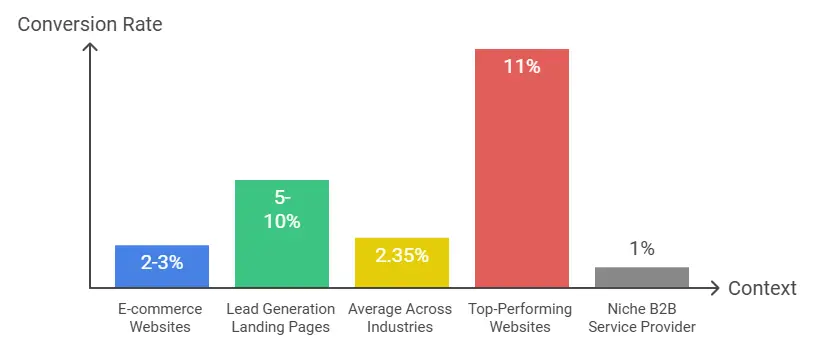
The average conversion rate varies significantly depending on the industry, target audience, and type of website. For example, e-commerce websites generally have an average conversion rate of around 2-3%, while landing pages for lead generation can see rates between 5-10%. However, these averages are subjective and can be influenced by factors such as user experience, product type, and pricing strategy.

Different sources report varying standards for what constitutes a "good" conversion rate. For instance, a study by WordStream suggests that a 2.35% conversion rate is average across industries, while top-performing websites often see rates of 11% or higher. However, what’s considered “good” can be highly context-dependent. A niche B2B service provider might thrive with a 1% conversion rate due to high-value sales, whereas a consumer product site may need a higher rate to achieve profitability.

It’s important to remember that these averages are just benchmarks. Your business’s unique factors, such as your brand’s reputation, customer journey, and the complexity of your offerings, play a significant role in determining what your ideal conversion rate should be. 
This formula can be applied to different campaigns, such as newsletter sign-ups, downloads, or sales. By segmenting your data, you can measure conversion rates for specific traffic sources, such as organic search, paid ads, or social media, helping you identify which channels are performing best and where improvements are needed.

Next in this series

Part 2: Part 2

Free PDF report

Incrementality in affiliate marketing

How to prove — and grow — the sales your program actually caused.

Get the incrementality report

Read next

Improving Conversion Rate Matters: Part 3

Improving low affiliate conversion rates may require website optimization to enhance user experience, trust, and checkout efficiency. A seamless, responsive design, clear CTAs, and personalized recommendations can transform visitors into loyal customers.

Twelve Things You Can Do RIGHT NOW to Improve Your Conversion Rate

Understanding how to increase conversion rate and implementing these practical strategies, can help optimize your website’s performance, create a better user experience, and drive more revenue from your existing traffic. 1. Track How People Interact with Your Site  &nbs

Curious what's leaking?

Get a free program audit

20 minutes with someone who's set up a program like yours before.

Book an audit